
The Adriatic does not rush into evening. Along the coast of Croatia, the final hours of the day often unfold slowly: stone houses turn gold, fishing boats return to quiet harbors, and the sea begins to mirror every shade of the sky. In small coastal towns, sunset is not just a view. It is a daily rhythm, shaped by light, water, history, and the easy pace of life beside the Adriatic Sea.
From Istrian hilltop villages overlooking the coast to Dalmatian towns facing nearby island silhouettes, these evenings reveal why Croatia has become one of the most memorable destinations in this part of the world.
Why the Adriatic sunset feels different
A sunset over the Adriatic Sea often feels unusually vivid because of the region’s geography. Much of the Croatian coastline faces west or southwest, giving many towns a clear line of sight toward the descending sun. The sea acts like a natural reflector, softening the light and spreading color across the horizon.
The effect changes from place to place. In a sheltered bay, the water may appear calm and silver. On an open beach, the sky can burn orange and pink above the waves. In an old town, narrow stone streets catch the last light of the day, creating a warm glow that feels almost cinematic.
The Adriatic is also visually layered. A single sunset may include the outline of an island, a bell tower, a marina, and distant mountains. This combination gives each view depth, making even a short evening walk feel like a complete travel experience.
Small towns create a slower evening rhythm
Large cities can offer famous sunset spots, but small towns often make the moment more personal. There is less noise, fewer distractions, and more space to notice details: the sound of glasses on a café terrace, the scent of pine near the shore, and the reflection of the sunset on moored boats.
In places such as Rovinj, Primošten, Cavtat, Vrbnik, Stari Grad, or small settlements along the Makarska Riviera, evening is part of everyday life rather than a scheduled attraction. Locals gather by the harbor, visitors walk the waterfront, and restaurants begin preparing dinner as the temperature becomes softer.
This is where the town itself becomes part of the scene. The sunset is not isolated from the destination; it falls across façades, church towers, stone steps, and seaside promenades. The result is a deeper sense of place.
Zadar and the art of watching the sea
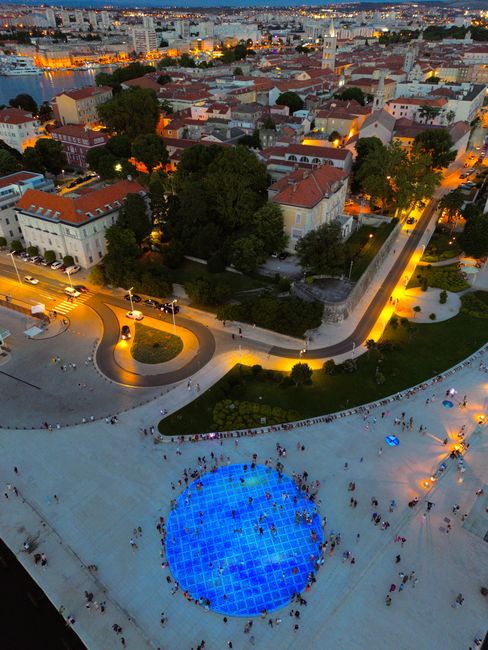
No discussion of Adriatic evenings is complete without Zadar, one of Croatia’s most recognizable sunset destinations. Its waterfront is famous for wide-open views across the sea and islands, making it one of the best-known places to watch the day fade into night.
Yet Zadar’s appeal is not only the sunset itself. The city combines Roman heritage, a lively old town, sea-facing public spaces, and a relaxed coastal atmosphere. As the light changes, people naturally gather by the water, turning sunset into a shared urban ritual.
For travelers who prefer a quieter version of the same beauty, smaller towns near Zadar offer a similar horizon with a more intimate feel. From nearby coastal villages and island harbors, the Adriatic sunset appears less like an event and more like a private moment.
Islands, beaches, and changing colors
Croatia’s islands give Adriatic evenings their distinctive shape. The sun may disappear behind an island ridge, slip into an open channel, or cast long shadows across the water. On Hvar, Brač, Korčula, Cres, Lošinj, and many smaller islands, each sunset depends on the exact angle of the bay.
A beach sunset is often the most direct experience. Bare feet in warm pebbles, clear shallow water, and a wide horizon make the scene simple and memorable. In contrast, watching from a hill above a town creates a broader perspective, where the coastline curves below and boats leave delicate lines across the sea.
The best spot is not always the most famous one. Sometimes it is a small pier, a quiet terrace, a coastal path, or a viewpoint above a marina. The Adriatic rewards patience and curiosity.
From coast to national parks: evening beyond the shoreline
Although the Adriatic coast defines much of Croatia’s sunset imagery, inland landscapes add another dimension to the country’s natural beauty. Croatia’s national parks include places such as Krka, with waterfalls, river scenery, and Mediterranean vegetation not far from the sea. Further inland, Plitvice Lakes National Park reveals a different kind of light, where forests and cascading lakes create a softer, greener atmosphere.
The connection matters because many travelers combine coast, island, and nature experiences in one itinerary. A day might begin near the lake landscapes of the interior and end beside the sea, watching the sky darken above a small harbor. This contrast between inland water and the Adriatic coastline is one of Croatia’s strongest travel advantages.
How to make the most of an Adriatic evening
The best Adriatic evenings are rarely complicated. Arriving a little early gives enough time to choose a good viewpoint, enjoy the changing colors, and see how the town transforms as daylight fades. Sunset is often more beautiful before and after the exact moment the sun touches the horizon, when the sky continues to shift and the sea holds the remaining light.
A few simple choices can make the experience better:
- Choose accommodation with a sea view if evenings matter to your trip.
- Explore the old town before sunset, then walk toward the waterfront.
- Look for west-facing beaches, promenades, terraces, and hill viewpoints.
- Stay after the sun disappears, when the colors often become deeper.
- Plan at least one quiet evening away from the busiest city centers.
Luxury villas, beachfront apartments, and peaceful houses with pools often make sunset part of the stay itself. Instead of leaving to find a viewpoint every night, travelers can enjoy the Adriatic atmosphere from a terrace, garden, balcony, or private poolside setting.
The lasting memory of Adriatic light
What makes an Adriatic evening special is the way it blends scenery with emotion. The sea is calm, the town slows down, the coastline becomes softer, and the final light of the day turns ordinary details into lasting memories. Whether seen from Zadar’s waterfront, a quiet island bay, a small Istrian harbor, or a Dalmatian beach, the sunset becomes part of how Croatia is remembered: warm, layered, and deeply connected to the water.